
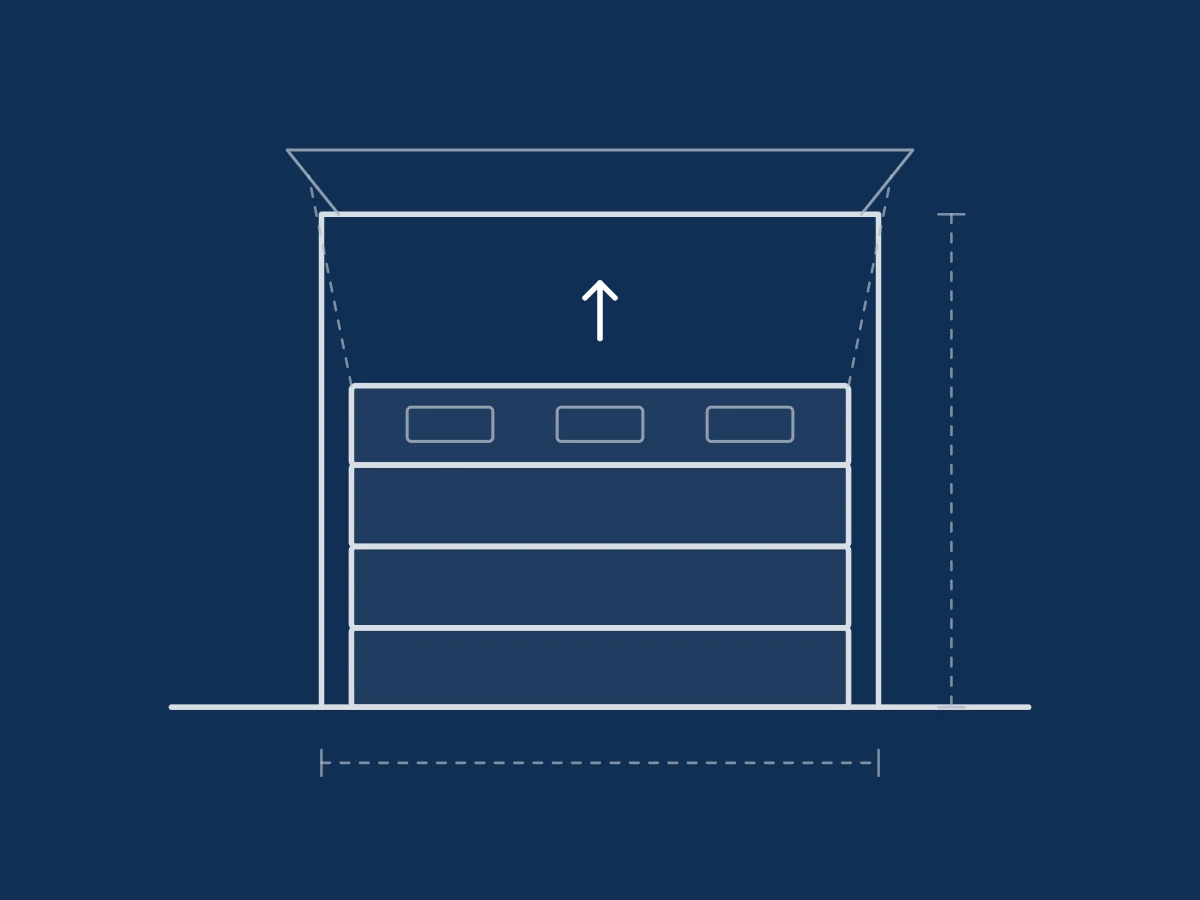
A sectional door (sometimes called a sectional shutter or overhead door) is made of horizontal hinged panels that rise on side tracks and then rest under the ceiling or parallel to the wall. When you set sectional door specifications for a warehouse or factory in Saudi Arabia, the items that decide how it performs are: panel type and insulation level, perimeter seals, track type based on the headroom above the opening, motor rating and number of cycles, and extras such as a wicket door, windows and safety devices. Defining these items before you request quotations makes supplier comparisons fair and makes sure the door suits the heat, dust and truck traffic at your site.
Many warehouse and plant managers ask for “a sectional door” with only the opening size, then find after installation that the door does not seal as it should, that its track clashes with lighting or overhead cranes, or that the motor cannot cope with peak-hour cycles. If you are still comparing door types, read roller shutters vs sectional doors first. This guide covers the next step: once you have chosen a sectional door, what do you need to specify?
Main components of a sectional door
- Panels: double-skin metal panels, usually filled with insulation, joined by hinges so they can bend as they move from vertical to horizontal.
- Side and overhead tracks: define how the door moves and how much space it needs above the opening and inside the building.
- Counterbalance system: springs carry much of the door’s weight so the motor works with less effort.
- Motor and control panel: set the speed, operating method and integration with site systems.
- Seals: at the floor, sides, head and between panels. They decide how tight the door really is.
Thermal insulation: when is it a priority?
In a hot climate, a large door in an air-conditioned or chilled warehouse can become one of the weakest points in the building envelope. Panel choice therefore depends on what is behind the door:
| Facility type | Insulation priority | What to focus on |
|---|---|---|
| Air-conditioned warehouse or heat-sensitive storage | High | Insulated panels of suitable thickness, tight seals around the whole perimeter, and shorter opening times |
| Chilled warehouse or cold rooms | Very high | Insulation specification set by the refrigeration designer, good sealing, and often a high-speed door for forklift traffic |
| Non-air-conditioned factory or workshop | Medium | Robust panels that resist impact and dust; insulation reduces heat gain but is not essential |
| Service entrance or open store | Low | A sturdy roller shutter may be enough instead of a sectional door |
Panel thickness alone does not tell the whole story. Edge and panel-joint sealing, installation quality and how long the door stays open all affect cooling loads. For building energy-efficiency programmes, see the Saudi Energy Efficiency Center.
Track types and headroom
The track is the item most often left out of a request, even though it decides whether the door can be installed at all:
- Standard lift: the door rises a little, then curves and rests horizontally under the ceiling. It needs a reasonable amount of headroom.
- Low headroom: for sites with limited space above the opening.
- High lift: the door travels further vertically before curving, to clear cranes, lighting or ducts.
- Vertical lift: the door rises fully parallel to the wall, for tall buildings where ceiling space must stay clear.
Before ordering, measure from the top of the opening to the ceiling or the nearest obstruction, and note what lies in the door’s path inside the building. Opening preparation is covered in how to prepare a door opening before installation.
Motor and duty cycle
A distribution warehouse with trucks arriving all day is very different from a store opened twice per shift. Give the supplier the approximate number of openings per day and the peak hours, so they can propose a motor and counterbalance that can handle that use. If the opening cycles constantly, the answer may be a sectional door for tight closing plus a high-speed door for daily traffic, as explained in when does your facility need a high-speed door.
Common options to specify before manufacture
- Wicket (pass) door: lets people pass without opening the main door, with its own safety requirements.
- Windows or transparent panels: let in daylight and show what is behind the door before it opens.
- Safety devices: a bottom safety edge and photocells that stop the door when something is in the way.
- Manual operation: chain or motor release for power cuts.
- Integration with site systems: such as access control systems or loading dock signals.
- Colour and finish: a coating suited to sun and dust on exposed sites.
Sectional doors and loading docks
In distribution warehouses a sectional door is often part of a complete loading bay: door, dock leveller and a shelter that seals around the truck. Coordinating the door size with dock height and truck types from the start avoids gaps that let heat and dust in during loading. For a wider view of warehouse doors, see automatic and industrial doors for factories and warehouses.
Maintenance in heat and dust
Dust and heat affect seals, springs and tracks. Include in your maintenance programme: inspecting and replacing damaged seals, checking spring tension and cable condition (by a technician only), cleaning tracks, and testing safety devices and manual release. See the automatic door maintenance guide or request our maintenance service.
Common mistakes when ordering a sectional door
- Sending only the opening size without the headroom or ceiling obstructions.
- Choosing uninsulated panels for an air-conditioned warehouse to save cost, then paying the difference in cooling bills.
- Ignoring the floor seal on uneven floors, leaving a gap under the door.
- A motor that does not match the duty cycle in busy warehouses.
- No frame protection in forklift routes.
What information is needed for a quotation?
- Opening width and height, distance from the top of the opening to the ceiling, and side room.
- What is behind the door: air-conditioned, chilled or not conditioned.
- Approximate openings per day and type of traffic (trucks, forklifts, people).
- Required options: wicket door, windows, integration with other systems.
- City and site location, such as Riyadh, Jeddah or Dammam, and whether the site is exposed to dust and wind.
To compare offers once you receive them, see how to compare automatic door quotations.
Next step
Browse Vally World’s sectional doors, then send your opening details through the quotation request page, or book a site survey so the team can define the right track, panels and motor, followed by installation and maintenance.
Frequently asked questions about sectional door specifications
What is the difference between insulated and uninsulated sectional doors?
Insulated doors have double-skin panels filled with insulation, so they reduce heat transfer and suit air-conditioned and chilled warehouses. Uninsulated doors are lighter and cheaper and suit sites where insulation is not a priority.
How much headroom does a sectional door need?
It depends on the track type, door size and motor, and low-headroom tracks exist for tight sites. It is confirmed after a site measurement or from the supplier’s data for the proposed model.
Can a sectional door be installed in an existing warehouse?
Yes in most cases, after surveying the opening, the ceiling and any obstructions in the door’s path, and choosing a suitable track type.
Does a sectional door work during a power cut?
It can be opened manually by chain or motor release depending on the system, and backup solutions can be added for critical entrances.
Is a sectional door better than a high-speed door for warehouses?
Each has its role. The sectional door gives tight closing and insulation, while the high-speed door cuts opening time in heavy traffic, and many warehouses use both on the same opening.